



How Venue Lighting Affects Your 360 Photo Booth Results
Yes, and it matters more than most people expect. Venue lighting is the single biggest factor in how your 360 photo booth footage turns out at a Sydney event, more than the booth itself. A dim hotel ballroom, a marquee lit only by fairy lights, or a room that goes dark for speeches all change what the camera captures. Most couples and event planners never think to ask about lighting until the night of the event, when there's nothing left to fix. We get this question constantly during pre-event calls, usually right after guests ask about song requests. This breaks down what actually happens to your footage under different lighting conditions, and what to check before you book.
Key Takeaways
The core issue: Venue lighting affects colour, brightness, and shadow on every guest the camera captures. A booth without its own light source inherits whatever the room provides, good or bad.
Colour clash: Warm venue downlights mixed with a cool white booth light create footage with an odd colour cast across faces and clothing. It's one of the most common complaints from guests reviewing their clips later.
Dark reception fix: A dedicated ring light mounted on the booth, not borrowed from the room, keeps footage consistent even when the venue dims for speeches or a first dance.
What to check: Ask your operator whether the booth carries its own light source or relies on ambient venue lighting, and whether they've worked at your specific venue type before.
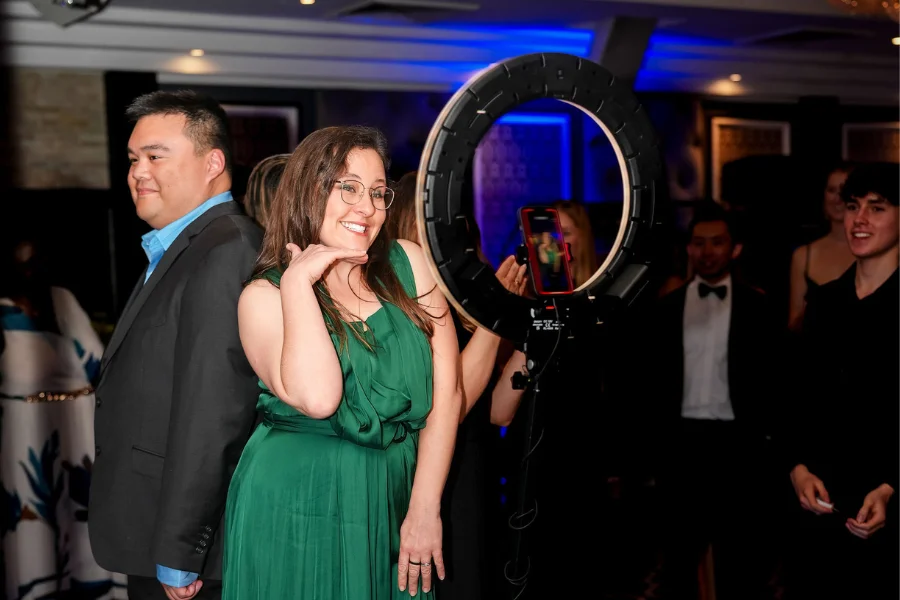
Equipment matters: 360 booths should have a premium ring light on every booth, so footage stays consistent whether you're in a bright marquee or a dim function room.
Why Does Lighting Matter More for a 360 Booth Than a Camera?
A 360 booth camera spins continuously around your guests, capturing every angle in one unbroken shot. A wedding photographer can reposition a flash between frames. A spinning camera arm can't do that mid-shot, so whatever illuminates the platform when the arm passes is what ends up in the final clip. That's why the booth needs its own light source built into the rig, not one borrowed from the room.
Ever notice how some 360 videos look flat and grainy while others look crisp and bright? That usually comes down to lighting, not camera quality. Sydney function rooms are notorious for uneven light too, bright near the bar, dim near the dance floor. A booth relying only on ambient light will produce a clip that looks completely different depending on where in the space it's set up.
Colour temperature is the part most people never think about. Warm venue downlights typically sit around 2700 to 3000 kelvin, while a cool white ring light runs closer to 5600 kelvin. Mix the two under one camera and skin tones shift orange in one corner of the frame and blue in another, sometimes within the same clip.
We've set up at a Wollongong function centre where the dance floor lighting dropped to near darkness for the bridal entrance. Guests using the booth in that window still got clear, well-lit results, because the ring light held exposure steady regardless of what the ballroom was doing.
What Are the Most Common Lighting Problems at Sydney Venues?
Most lighting complaints trace back to one of these situations.
Mixed colour temperature, where warm ballroom downlights clash with a cooler booth light and skin tones come out looking off.
Rooms that dim deliberately for key moments, including speeches, the cake cutting, or the first dance, right when guests want to jump in the booth.
Outdoor marquees and garden ceremonies where natural light disappears fast after sunset, leaving nothing for the camera to work with.
None of these problems mean the venue is a bad choice. A gorgeous harbourside marquee or a heritage ballroom in the CBD can still produce forgettable footage if nobody planned around the lighting shift that happens between cocktail hour and the reception proper.
Which Sydney Venue Types Need Extra Lighting Planning?
Some venues need more thought than others. Here's how the common ones stack up.
Venue Type | Typical Lighting Challenge | What We Check For |
Hotel ballroom (CBD, North Sydney) | Warm downlights, dimmed for speeches | Colour temperature clash, dimming schedule |
RSL or function club | Fluorescent overheads, uneven spread | Bright and dark zones across the floor |
Outdoor marquee (Hills District, Southern Highlands day trips) | Natural light gone after sunset | Backup power for lighting, wind exposure |
Rooftop or open-air venue | Bright at 4pm, dark by 7pm | Transition plan as daylight fades |
Western Sydney and South West function centres | Mixed LED and downlight combinations | Consistent exposure across both zones |
Booked a rooftop for golden hour photos? Good move, but what happens to your booth footage once the sun actually goes down? If your venue falls into more than one of these categories, mention it when you're briefing your photo booth company. It changes how they set up.
Ring Lights vs Cheap LEDs: Why Equipment Quality Matters
Not all booth lighting is built the same. Some operators bolt a basic LED strip to the rig and call it done. It's cheaper to buy, but it produces flatter, less flattering video and struggles the moment the room gets dark.
360 booths should use better ring lights on the market rather than a cheap external light. It's paired with a custom-built booth designed around it, so the light sits at the right distance and angle for every guest, not just the ones standing in the centre of the platform. A diffuser softens the edges further, which matters most in a dark room where the ring light is doing all the work with nothing from the venue to help it along. We also carry backup ring lights and cabling to every event, because equipment failure at 9pm on a Saturday isn't something you get a second chance to fix.
Why pay more for lighting most guests will never consciously notice? Because they will notice the moment it is missing. Cheap lighting shows up in every single clip your guests keep. A wedding video gets watched once a year. A 360 booth clip gets replayed the week after the event, shared, and rewatched by people who weren't even there.
What to Ask Your Photo Booth Company About Lighting Before You Book
A short conversation now saves a disappointing gallery later. Ask these questions.
Does the booth have its own built-in light, or does it rely on the room?
Have you worked at this venue before, and do you know its lighting setup?
What happens if the room dims or goes dark during the event?
Do you carry backup lighting equipment in case something fails at night?
Any operator who can answer these clearly and quickly has probably thought this through already. If they seem unsure, that's worth noting before you sign anything.
Frequently Asked Questions
Can a 360 photo booth work in a dark venue?
Yes, as long as the booth has its own light source. A ring light mounted on the rig keeps footage consistent even when the room dims for speeches or goes dark for a first dance. Booths that rely only on ambient light will struggle in the same conditions.
Do you need to tell your photo booth company about venue lighting beforehand?
It helps. Mention whether your venue has warm downlights, dims for parts of the night, or is outdoors after sunset. A good operator will ask anyway during the pre-event brief, but flagging it early means there's time to plan around it.
Will outdoor lighting affect my 360 booth footage after sunset?
Yes. Natural light disappears fast once the sun goes down, and a booth without its own light will produce dark, grainy clips outdoors after dusk. If your ceremony or reception runs into the evening outdoors, confirm your booth carries backup lighting for that stretch.
Planning an event and want every clip to look consistent, no matter what the venue throws at it? Check out our 360 photo booth hire in Sydney to see how we handle setup, lighting, and everything else on the night.
Ready to Capture Every Moment?
Bring the WOW factor to your next event with Shutter360's photobooth experience. Enquire today and let's make it unforgettable.