



What Happens If a Photo Booth Breaks Down Mid-Event?
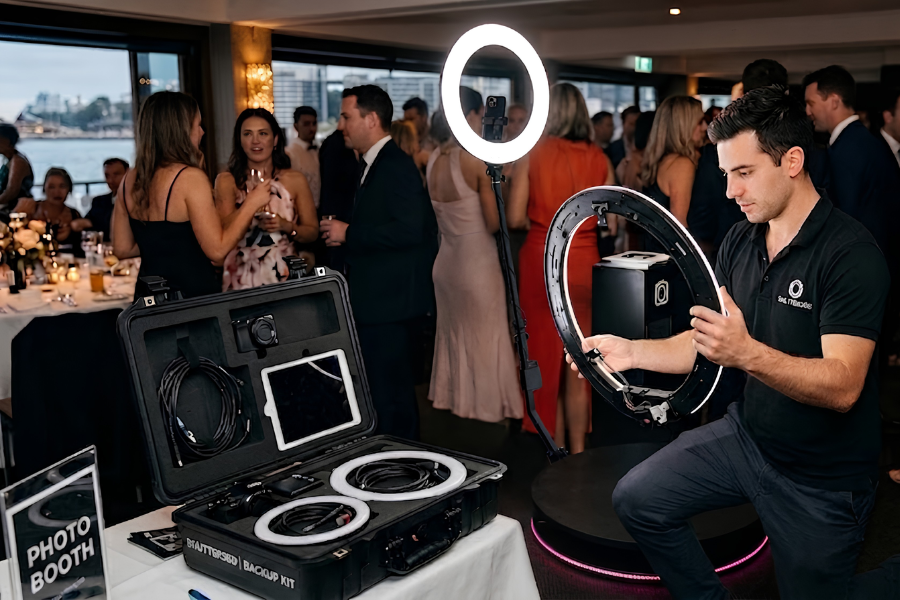
If a photo booth's equipment fails mid-event, a properly prepared operator swaps the broken part from a backup kit and has the booth running again within minutes. Most guests never notice. That's the short answer, and it's the standard Shutter360 works to at every Sydney event. The longer one is that not every Sydney photo booth company carries backup gear, and the gap shows up exactly when you need it least, halfway through your reception, launch, or formal.
Equipment does fail. Ring lights blow, cables fray at exactly the wrong moment, and printers jam when you can least afford it. What separates a smooth night from a stressful one isn't whether something goes wrong. It's whether the operator planned for it. Here's what actually happens when a booth breaks down, and what to ask before you book one.
Key Takeaways
What breaks most often: Ring lights, cables, and printers are the most common failure points at a Sydney photobooth, not the camera or the software behind it.
Backup gear is the fix: A prepared operator carries duplicate ring lights and cables to every event, so a failure means a quick swap, not a shutdown.
Swap time matters: Sydney industry guidance points to under 5 minutes as the benchmark for replacing a faulty part without disrupting guest flow.
Ask before you book: Confirm backup equipment is standard, not an add-on, and that the attendant is trained to fix issues on the spot rather than call for help.
Hire time protection: A short technical hiccup shouldn't cost you part of your booked hours. Get this confirmed before you sign anything.
What Goes Wrong at a Photo Booth Mid-Event
Most people picture a breakdown as the whole unit going dark. In reality, it's rarely that dramatic. The camera and software are the most reliable parts of the setup because they're solid-state and see little wear. The real failure points are physical: ring lights that overheat after hours of continuous use, cables knocked loose during a busy reception, and printers that jam when the paper feeds unevenly.
Venue conditions make this worse. A booth crammed into a tight corner near a bar gets bumped constantly, and one near a dance floor picks up vibration from subwoofers that can loosen connections over a four or five hour hire. None of that is unusual. It's simply what happens when gear runs all night in a room full of people having a good time. The real question isn't whether a part will act up. It's what the operator does when it does.
Do Sydney Operators Carry Backup Equipment?
Not consistently, and that's the real gap in this market. Search almost any Sydney photo booth booking checklist and backup equipment shows up as something to specifically ask about, which tells you it isn't guaranteed. Some operators run a single ring light and camera rig with no spare on hand. If that ring light dies at hour two of a reception, the booth stays down until someone drives a replacement across town, if one even exists.
We've had a ring light die mid-job before. Because we carry two on every booking, along with duplicate cables for every critical connection, the attendant swapped it out without the couple or their guests knowing anything had happened. That's the standard we hold ourselves to, and it's worth asking any operator you're considering whether they can say the same. A one-line answer like "yes, we carry spares" is a good sign. A pause, or a "we haven't had an issue yet," is not.
How Fast Should a Backup Swap Take?
Speed is what protects the guest experience. A rig down for 20 minutes at a wedding reception isn't a technical footnote, it's 20 minutes of guests standing around wondering if it's broken for good. Sydney industry guidance generally points to under 5 minutes as the benchmark for a trained attendant to spot a fault and swap in a spare part.
That number only holds if the attendant knows the rig inside out and the spare gear is within arm's reach, not packed away in a car. Someone shown the setup once will fumble under pressure. Someone who's run the same booth at dozens of events spots the problem fast and fixes it before the DJ finishes the next song.
What Questions Should You Ask Before You Book a Photo Booth?
A few direct questions during your initial enquiry will tell you more about an operator's preparedness than their website ever will. Ask these before you put down a deposit:
Do you carry backup ring lights, cables, and a spare camera to every event?
If something fails, how long does a typical fix take?
Will my hire time be extended if there's a technical delay?
Is your attendant trained to troubleshoot on-site, or would they need to call someone?
Has your equipment ever failed at a live event, and what happened?
That last question is the most telling. Every operator who's run enough events has had something go wrong eventually. The ones worth booking are the ones who answer honestly and explain what they changed afterwards. For broader guidance on vetting any event supplier in NSW, it's also worth knowing your consumer rights when hiring event services.
Does a Breakdown Cut Into Your Hire Time?
This is the part most people forget to ask about until it's too late. If a rig goes down for 15 minutes and the operator doesn't extend your hire, you've paid full price for less time. A reputable operator treats setup, pack-down, and any technical downtime as separate from your booked hours, not something that eats into them.
Get this in writing if you can, even a confirmation email. It costs an operator almost nothing to guarantee, and its absence tells you something about how they weigh your night against their bottom line.
Why Pre-Event Planning Prevents Most Failures
A lot of equipment failures aren't really equipment failures. They're planning failures that show up as gear problems. A rig placed near an unstable power source trips out repeatedly. Skip checking the floor for level ground and the footage wobbles. Cram it into a space nobody measured beforehand and it ends up too close to speakers or foot traffic.
We send a briefing form four weeks out to lock in logistics like venue access, power supply, and floor layout, alongside personalisation details like branding and overlays. Everything is finalised two weeks before the event, so there's no scrambling when the truck pulls up. Fewer last-minute surprises on logistics means fewer excuses for the gear to misbehave in the first place.
Frequently Asked Questions
What happens if a photo booth's equipment fails during my event?
A prepared operator carries backup gear, ring lights, cables, and sometimes a spare camera, to every booking. When something fails, the attendant swaps the faulty part on the spot, ideally within a few minutes, so guests barely notice the booth was ever down.
Do I lose part of my hire time if the booth breaks down?
You shouldn't. Reputable operators treat technical downtime the same way they treat setup and pack-down: separate from your paid hire hours. Confirm this before booking, ideally in writing, so you're not paying full price for a shorter experience.
What should I ask a Sydney photo booth company about backup equipment?
Ask whether they carry duplicate ring lights, cables, and a spare camera to every event, how long a typical fix takes, and whether they've had equipment fail before. Specific, confident answers are a far better sign than vague reassurances.
Ready to Book a Photo Booth That Won't Let You Down?
Equipment problems happen to every operator eventually. What matters is whether they've planned for it. If you're weighing up options for your next Sydney event, take a look at 360 photo booth hire in Sydney to see how a fully backed-up setup and a professional attendant come together on the night.
Ready to Capture Every Moment?
Bring the WOW factor to your next event with Shutter360's photobooth experience. Enquire today and let's make it unforgettable.